Astrology can feel like alphabet soup. Here’s a friendly path:
Your Sun, Moon, and Rising
Start with the “big three.”
- Sun sign (Daily Horoscope): the basic “I am” identity most people know.
- Moon sign (Moon Sign Calculator): emotional style and comfort needs.
- Rising/Ascendant (Rising tool): how others first perceive you; the tone of your chart.
Your Natal Chart
Use the Birth / Natal Chart preview. Even the short summary helps you see placements like “Mars in Gemini” or “Venus in Cancer,” which give extra color beyond your Sun sign. If the time of birth is unknown, the Birth Time Rectification tool offers a guided set of questions to narrow the window. For why exact time/zone matter, see the IANA time-zone database — it’s the standard many systems use for historical offsets and daylight-saving rules.
Your Houses
If you enjoy the natal basics, the House Calculator explains house cusps and why an emphasis in the 1st/10th/7th/4th houses feels different. We’ll show common systems (Placidus, Koch, Whole Sign) with simple wording. (These are interpretive frameworks in astrology; they’re not astronomy standards.)
Your Aspects
When two planetary placements form a geometric angle, we call that an aspect. Use the Aspect Calculator for quick highlights like “Sun trine Moon,” “Venus square Saturn,” or “Mars opposite Neptune.” Each major aspect links to a short explanation. If you want the astronomy behind angular separations, see IAU’s educational resources.
Your Timing
- Current Transits summarize a few themes active today (entertainment framing).
- Solar Return (yearly) and Lunar Return (monthly) previews give a sense of tone over time.
- Planetary Hours and Electional Astrology are for users who enjoy choosing symbolic windows (e.g., a day to pitch, launch, or reset). For real-world sunrise/sunset and planetary visibility basics, timeanddate has practical calculators.
If you prefer reading rather than calculating, head to our hubs and guides:
- Zodiac Signs Hub — traits, strengths, challenges, myths, FAQs for all twelve signs.
- Compatibility Hub — overviews of pairings and links to synastry/composite tools.
- Horoscopes Hub — daily/weekly/monthly/yearly archives with clear timestamps.
- Transits and Mercury Retrograde — simple explanations of what’s “in the air.” (For the astronomy behind “apparent retrograde,” see the explainer above.)
- Tarot Guide — card meanings & spreads for people who enjoy symbolic prompts.
- Astrology 101 / Glossary — beginner-friendly walkthroughs and quick definitions.
What the 12 zodiac signs mean (quick tour)
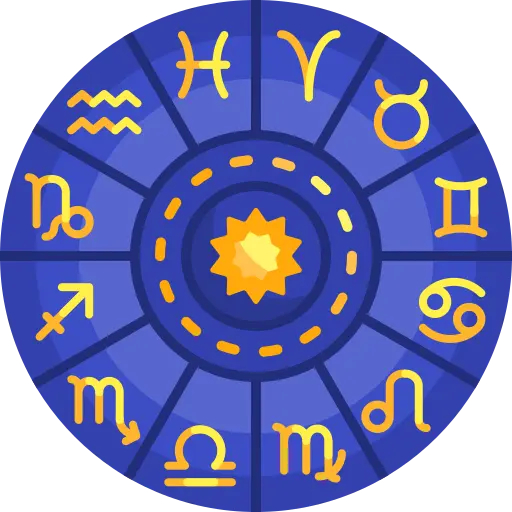
Astrology uses symbolic archetypes. These aren’t destinies; they’re stories and tendencies that many people find relatable. A one-line tour:
- Aries (Fire, Cardinal): quick start, bold first step, learns by doing.
- Taurus (Earth, Fixed): steady builder, values comfort and consistency.
- Gemini (Air, Mutable): curious connector, thrives on variety and ideas.
- Cancer (Water, Cardinal): protective nurturer, sensitive to emotional climate.
- Leo (Fire, Fixed): expressive center stage, playful warmth, proud heart.
- Virgo (Earth, Mutable): practical helper, loves refining, fixing, improving.
- Libra (Air, Cardinal): relationship-first, negotiator, seeks harmony and fairness.
- Scorpio (Water, Fixed): depth, focus, loyalty; isn’t afraid of transformation.
- Sagittarius (Fire, Mutable): explorer, teacher, big-picture optimism.
- Capricorn (Earth, Cardinal): strategic climber, timeless taste, long-term goals.
- Aquarius (Air, Fixed): future-oriented, systems thinker, values individuality.
- Pisces (Water, Mutable): intuitive, compassionate, creative, loves the in-between.
Your chart blends all 12 archetypes in unique ratios. A Leo Sun can be quiet if the rest of the chart leans Earth/Water; a Virgo may be surprisingly spontaneous with Fire signatures. That’s why we love the Element Balance tool — it shows whether your map leans Fire/Earth/Air/Water.
Love, connection, and compatibility (how to use our tools)
There are two quick ways to explore relationships here:
1) Sun-sign compatibility (fast & fun).
Choose two signs and see a mini score with a one-paragraph note. It’s a casual way to compare broad styles. Use it for a laugh, a conversation starter, or a quick vibe check.
2) Chart-based comparisons (synastry/composite).
If you know both people’s birth data, the Synastry Chart and Composite Chart previews give richer hints. Synastry looks at how Person A’s planets interact with Person B’s planets. Composite creates a new chart from midpoints to describe the relationship’s overall tone. Even a short preview can highlight themes like easy flow (trines), intensity (oppositions), or friction that can be productive with effort (squares). Again, entertainment only.
For practical relationship check-ins, we like the Decan Calculator to fine-tune Sun-sign tone and the Current Transits to see day-to-day weather that might color conversations.
Timing, seasons, and “what’s happening right now”
Astrology loves cycles. You’ll see the site reference three kinds of timing:
Transits — where planets are today relative to the zodiac. For astronomical positions and tables, NASA/JPL Horizons is the authoritative dataset. We translate that idea into simple, human-readable notes here.
Returns — when a planet returns to its natal position.
Progressions — a symbolic timing technique used by many astrologers to read inner phases (interpretive, not astronomical).
If Mercury Retrograde is trending, our Retrograde Checker shows which planets are retrograde on any date (apparent from Earth’s perspective). For a plain astronomy refresher on what “retrograde” really means, see timeanddate.
Western, Vedic, Chinese, and numerology — what’s the difference?
Western (tropical zodiac):
This is the familiar Aries→Pisces sequence anchored to the seasons around the March equinox. For astronomy context on equinoxes and seasons, see timeanddate.
Vedic (Janam Patrika / Kundli):
Vedic astrology often uses a sidereal zodiac and different house techniques. Our Vedic Kundli preview is clearly labeled and separate from Western tools. (If you want a neutral, academic orientation to these traditions, Britannica is a good starting point.)
Chinese zodiac:
Based on birth year with animal/element cycles; see Britannica for background.
Numerology:
Symbolic associations with numbers derived from your name and birth date. It’s not astronomy; we include a light preview because many people enjoy comparing themes across systems.
Methodology in plain English (how the engines think)
Our Methodology page goes deep, but here’s the short version:
- Ephemerides and calculations: we reference well-known astronomical datasets (e.g., NASA/JPL Horizons).
- Time zones: conversions follow the IANA tz database used across the web.
- Zodiac and houses: Western tools default to the tropical zodiac. House systems shown in pro tools are Placidus, Koch, and Whole Sign; each has trade-offs.
- Aspects: major aspects include conjunction, opposition, square, trine, and sextile. For general astronomy education materials and angles, see IAU resources.
- Interpretations: we write short, friendly summaries that aim to be clear and non-deterministic.
- Limits: demo tools are summaries, not professional readings; time zones, daylight saving rules, and unknown birth times can affect precision. When accuracy depends on exact birth time, we say so.
- We try to keep the line between calculation (what the math says) and interpretation (what an astrologer might infer) very visible.
A people-first approach to privacy and accessibility
Privacy: Our demo previews are built to avoid persistent storage of personal data. Details and opt-outs live in the Privacy Policy. If you’re curious about global privacy frameworks often referenced by web users, see GDPR in plain English and California’s CCPA overview. (We’re not giving legal advice; links are for user context.)
Accessibility: We follow W3C’s WCAG guidance and track Google’s Core Web Vitals recommendations. If you face barriers using the tools, the Accessibility Statement has our contact and targets.
Questions people ask (and quick answers)
Is this medical or financial advice?
No. It’s entertainment and reflection, not a substitute for professional services.
How accurate is the natal chart if I don’t know my exact birth time?
Sun, Moon (with a range), and many planet placements are still helpful. Houses and the Rising sign depend heavily on time and location. Use Birth Time Rectification for a guided window. Time handling depends on reliable zone data like IANA tz.
Why do different sites give slightly different results?
House systems, time-zone databases, and interpretive libraries vary. Even within the same system, authors choose different tone and emphasis. That’s normal.
What’s the fastest way to learn astrology from scratch?
Try the Zodiac Signs Hub for the 12 archetypes, then the Glossary for terms like houses/aspects. For neutral background reading, Britannica is handy.
Do you sell my data?
No. See the Privacy Policy; we explain what’s collected (if anything) and how to opt out. For general privacy context, see GDPR.
Do I need an account?
Not for previews. If you want saved charts, email subscriptions, or synced preferences later, an account may help — we’ll keep it optional.
How to use the tools like a pro (practical recipes)
Five-minute personal check-in
- Read your Daily Horoscope for tone.
- Scan Current Transits for a one-liner (“clear communications,” “shore up plans”).
- Peek at Moon Sign if you’re in a feelings-heavy week.
Relationship vibe check
- Run Love Compatibility for a quick laugh and a first read.
- If you have data, open Synastry to see one or two standout aspects.
- Use Composite for the “team personality” of the relationship.
Planning a launch/interview/move
- Check Transits for high-level weather.
- Try Planetary Hours for a symbolic window; don’t overthink it.
- Use Electional for a coarse suggestion if you like adding a ritual touch.
Deep-dive weekend
- Generate a Natal Chart and write down Sun/Moon/Rising, Venus, Mars, Saturn.
- Use Aspect Calculator to list 3–5 major aspects.
- Skim House Calculator to see where activity concentrates.
- Read the Glossary entries that match what you pulled.
A gentle word on myths and expectations
Astrology has a long history and many branches. It isn’t a science and doesn’t predict the future with certainty; it offers a vocabulary of symbols people use to reflect on patterns. If you treat it like weather — “bring an umbrella just in case” — you’ll have a better time than if you expect a crystal ball. For the astronomy community’s perspective, explore IAU outreach pages.
Where to go next (choose your own path)
- Begin with your Natal Chart preview and the Zodiac Signs Hub.
- Or jump straight to Love Compatibility and send a friend a playful note.
- If you like timing, check Current Transits and Retrograde Checker.
- Curious about other traditions? Try Vedic Kundli or the Chinese Zodiac lookup (background: Britannica link above).
- Want to actually learn? Read Astrology 101 and keep Glossary nearby.
If you prefer curated reading, our homepage “Hubs & Guides” section links to the most requested topics with short overviews: Horoscopes, Compatibility, Transits, Tarot, and Mercury Retrograde. Each hub groups tools + articles so you can understand first and calculate second.
Our promise (and how you can help)
We’ll keep the site fast, keep the language clear, and keep the line between fun and fact straight. If something is confusing or hard to use, tell us. Accessibility requests get priority; if you need a feature to make a tool usable (keyboard navigation, contrast improvements, screen-reader labels), we want to hear it.
Enjoy exploring. Pick any tool on the homepage, try a preview, and see what resonates. Astrology can be a playful mirror — and sometimes a great conversation starter with people you care about.
Reminder: All content and tools are for entertainment and personal insight only. For health, legal, financial, or other decisions, consult qualified professionals.